A solar-powered robot can run for a long time, but “forever” asks more from the machine than sunlight alone can give. Night, clouds, dust, battery wear, and broken parts all matter once the robot leaves a clean demonstration.
- Sunlight can refill a battery, but only when the panel receives enough light.
- A robot needs stored energy for night, shade, rain, and heavy work.
- Motors, batteries, sensors, and seals still wear out.
The energy budget comes first
A robot spends energy every time it moves, senses its surroundings, sends data, or waits with its computer running. Its solar panel must collect at least that much energy over the same period, with extra capacity for bad weather and losses during charging.
That balance changes with the job. A fixed inspection robot may spend most of its day still, while a mobile robot uses more power to drive, climb, lift, or turn. A small panel on the robot’s body may keep the control system running, but it may not refill the battery after a long work cycle.
Panel size also limits the answer. A robot has only so much room for solar cells, and its body may point away from the sun as it moves. A panel that works well at noon can collect much less energy under cloud, shade, dirt, or a poor angle.
Night is the first hard limit
Solar power stops when the sun goes down. The robot then depends on a battery or another stored-energy system. That storage must cover the full dark period, plus enough reserve for days when sunlight stays weak.
Battery size adds weight. Extra weight makes a mobile robot work harder, which raises power use and calls for a larger battery. The design can turn into a loop: more storage gives longer operation, but the added mass increases the energy needed to move.
The robot may also need to stop work when its battery reaches a safe lower limit. That reserve protects the cells and leaves enough power for the robot to shut down, send an alert, or return to a charging point.
Weather and dirt change the result
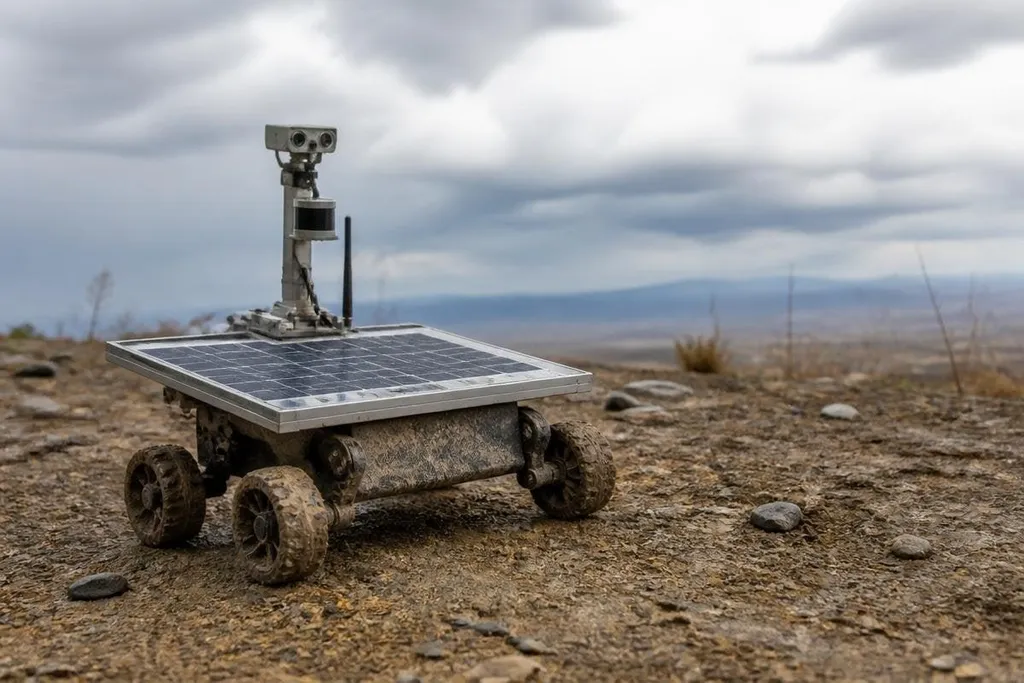
A solar robot works best when its panel stays clear and receives strong light. Dust, mud, snow, leaves, and water drops can reduce the light reaching the cells. A robot in a field, desert, or coastal area may face different problems from one on a clean roof.
Weather changes the daily energy supply as well. Clouds can reduce output, while rain can add both lower light and extra work for motors, pumps, or heaters. A robot that needs the same output every day must carry more storage or use another power source during poor conditions.
A solar robot can run for years only if its daily energy use stays below what its panel collects. Battery size, cloud cover, and motor demand decide how much work remains after sunset. Reports on solar robot power limits from Robot24.com can put claimed uptime beside the battery, weather, and work schedule. Power solves one problem; parts still age.
The robot still wears out
Solar energy does not stop mechanical wear. Wheel bearings, gearboxes, cables, seals, cameras, and motors can fail even when the battery stays charged. Battery cells also lose storage capacity after repeated charge cycles and exposure to heat.
Software and communications bring their own limits. A robot may need a network connection, map updates, replacement parts, or a person who can inspect it. If the machine works far from a service team, a small fault can end the mission long before the solar panel reaches the end of its life.
I'd treat “forever” as a physics claim, not a product promise. A better target is a service interval that matches the job, with enough stored energy to handle the worst expected conditions.
Check the design before you buy
Use these questions when judging a solar-powered robot:
- Daily load: How much energy does the robot use while moving, sensing, waiting, and communicating?
- Night reserve: Can the battery cover the longest dark period plus several weak-sun days?
- Panel position: Does the robot keep its solar cells pointed toward useful light during normal work?
- Cleaning plan: Who removes dust, mud, snow, or leaves, and how often?
- Battery service: What happens when storage capacity falls, and can the pack be replaced?
- Repair access: Can a technician reach the robot before a small fault becomes a long outage?
A solar-powered robot can stay in service for years if its energy use, storage, weather exposure, and repairs fit the site. It cannot run forever without maintenance, because sunlight can refill a power system, but it cannot replace worn hardware.